DIY Face Masks for Glowing Skin at Home: 5 Recipes That Work
A glowing complexion does not require a $60 jar from a beauty counter. Some of the most effective skincare ingredients are already sitting in your kitchen: honey, oatmeal, yogurt, turmeric, and avocado have real, documented benefits for skin. Used correctly, homemade masks can hydrate, brighten, and calm your skin for almost no cost. Patch-test any new mask on your jawline first, and stop if you feel stinging or see redness.
1. Honey and Oatmeal Soothing Mask (Dry or Sensitive Skin)
Honey is a natural humectant, meaning it draws moisture into the skin, and it has mild antibacterial properties that help calm breakouts. Oatmeal contains compounds called avenanthramides that reduce inflammation and itching — which is why dermatologists often recommend oatmeal baths for irritated skin.
Mix two tablespoons of finely ground oatmeal with one tablespoon of raw honey and a teaspoon of warm water to form a paste. Apply it to clean skin, leave it for 15 minutes, then rinse with lukewarm water. Your skin will feel softer immediately, and weekly use helps maintain hydration through dry seasons.
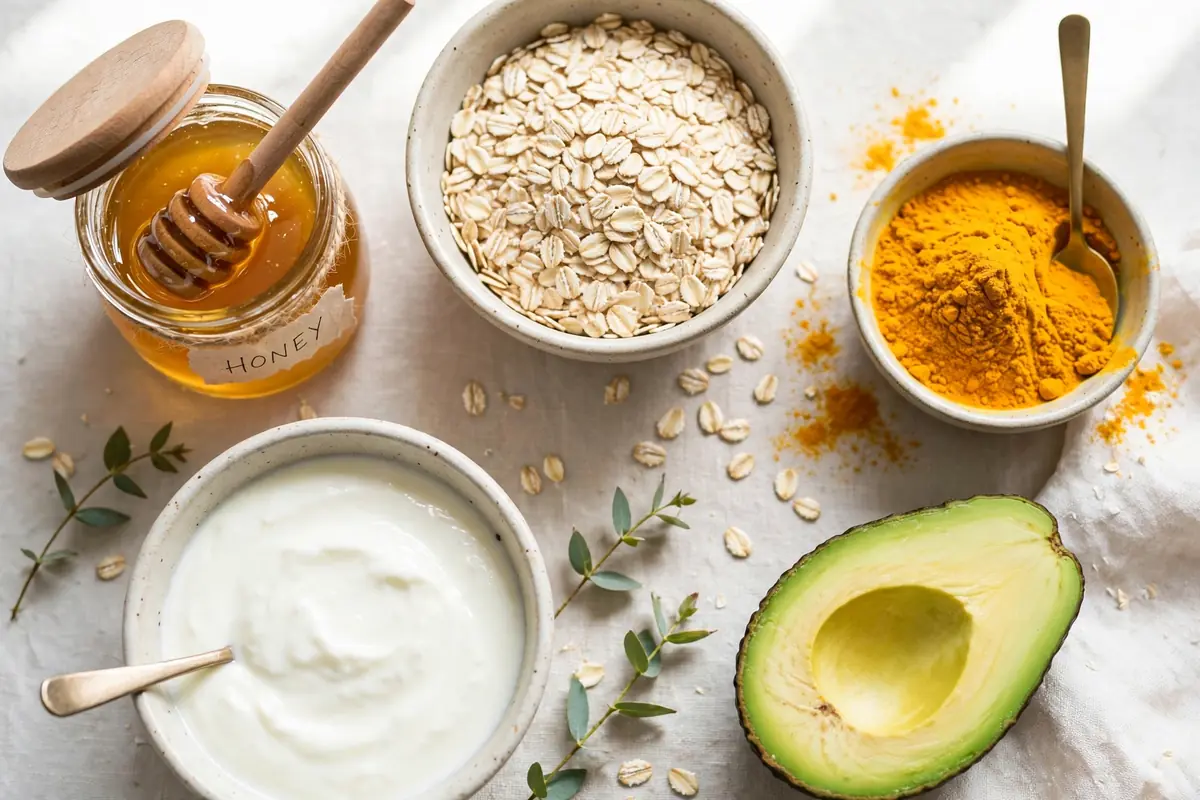
2. Yogurt and Turmeric Brightening Mask (Dull Skin)
If your skin looks tired and dull, this is the mask to try. Yogurt contains lactic acid, a gentle alpha-hydroxy acid that dissolves dead skin cells and reveals brighter skin underneath. Turmeric's active compound, curcumin, is a strong antioxidant and anti-inflammatory that helps even out skin tone.
Mix two tablespoons of plain, unsweetened yogurt with half a teaspoon of turmeric powder and a teaspoon of honey. Apply a thin layer, leave it for 10 to 15 minutes, and rinse thoroughly. One warning: turmeric can temporarily tint fair skin yellow, so use only a small amount and rinse well. Use this mask once a week, not daily — over-exfoliating with acids irritates skin.
3. Avocado and Honey Hydrating Mask (Very Dry Skin)
Avocado is rich in oleic acid and vitamins E and C, all of which nourish the skin barrier and lock in moisture. Combined with honey, it makes one of the most deeply hydrating masks you can make at home — ideal after a week of cold weather, sun exposure, or heating indoors.
Mash half a ripe avocado until smooth, mix in one tablespoon of honey, and apply a thick layer to your face and neck. Leave it for 15 to 20 minutes, then rinse with warm water. Your skin will feel noticeably softer and more supple. This mask is best once a week, and it doubles as a quick treatment for dry hands too.
4. Green Tea and Aloe Cooling Mask (Oily or Irritated Skin)
Green tea is packed with polyphenols, particularly EGCG, which research shows can reduce oil production and calm inflammation — two major wins for oily or acne-prone skin. Aloe vera gel soothes redness and hydrates without adding oil.
Brew a cup of green tea, let it cool completely, and mix two tablespoons of the tea with two tablespoons of pure aloe vera gel. Apply with clean fingers or a brush, leave for 15 minutes, and rinse. This mask feels especially good after sun exposure or a long day in heat, and it is gentle enough to use twice a week.
5. Banana and Yogurt Gentle Exfoliating Mask (Combination Skin)
Bananas contain vitamin A, potassium, and natural moisture-binding compounds, while yogurt's lactic acid provides the gentlest possible exfoliation. Together, they smooth rough texture without the harshness of scrubs, which can create micro-tears in the skin.
Mash half a ripe banana, mix in one tablespoon of plain yogurt, and apply to clean skin for 15 minutes. Rinse with lukewarm water and follow with your regular moisturizer. This is an excellent weekly "Sunday reset" mask for most skin types, including combination skin.
Ingredients to Never Put on Your Face
Just as important as what works is what does not. Never use undiluted lemon juice — its acidity and compounds that react with sunlight can cause burns and dark patches. Skip baking soda, which is far too alkaline and strips your skin barrier. Avoid undiluted apple cider vinegar, raw egg whites (which carry salmonella risk), and cinnamon or essential oils applied directly, which commonly cause allergic reactions and burns.
The rule is simple: if an ingredient stings, burns, or turns your skin red, wash it off immediately and do not use it again. Natural does not automatically mean safe.
How to Get the Most From DIY Masks
A few habits make homemade masks far more effective. Always start with clean skin so the ingredients can actually reach it. Apply masks with clean hands or a brush, never with fingers straight from a jar you will reuse. Use a mask once a week — more is not better, and over-masking irritates skin. And always follow with moisturizer to seal in the benefits.
DIY face masks will not replace sunscreen, retinoids, or professional treatments for serious skin conditions. But for everyday glow, hydration, and brightness, these five kitchen recipes genuinely work — and they cost almost nothing. Pick the one that matches your skin, patch-test it, and enjoy your at-home glow.