Hair Care Routine for Healthy, Shiny Hair: What Actually Works
Walk down any beauty aisle and you will find hundreds of products promising miraculous hair. The truth is simpler — and cheaper. Healthy, shiny hair comes mostly from a consistent routine, gentle handling, and protecting your hair from damage, not from the most expensive bottle on the shelf.
Hair is technically dead protein once it leaves the follicle, which means damaged hair cannot truly "heal" — it can only be protected, smoothed, and eventually trimmed away. That is why prevention beats repair every time. Here is a research-backed routine that works for every hair type.
Start With Your Scalp, Not Your Ends
Most people focus on their ends, but healthy hair starts at the scalp. Your scalp is skin, and like facial skin, it needs regular cleansing and care. Product buildup, excess oil, and dandruff can clog follicles and slow healthy growth.
Massage your scalp gently with your fingertips for a minute while shampooing — this boosts blood circulation to the follicles and helps distribute natural oils. If you have dandruff or an itchy scalp, look for shampoos with zinc pyrithione or ketoconazole, which dermatologists recommend as first-line treatments. A healthy scalp grows stronger hair; no conditioner can compensate for a neglected one.
Wash Less Often, and Wash Gently
One of the most common hair mistakes is overwashing. Shampooing every day strips away sebum, your hair's natural conditioner, leaving it dry and frizzy. Most hair types do best washing two to three times a week. Very oily hair may need every other day, while curly and coily hair often thrives on once a week.
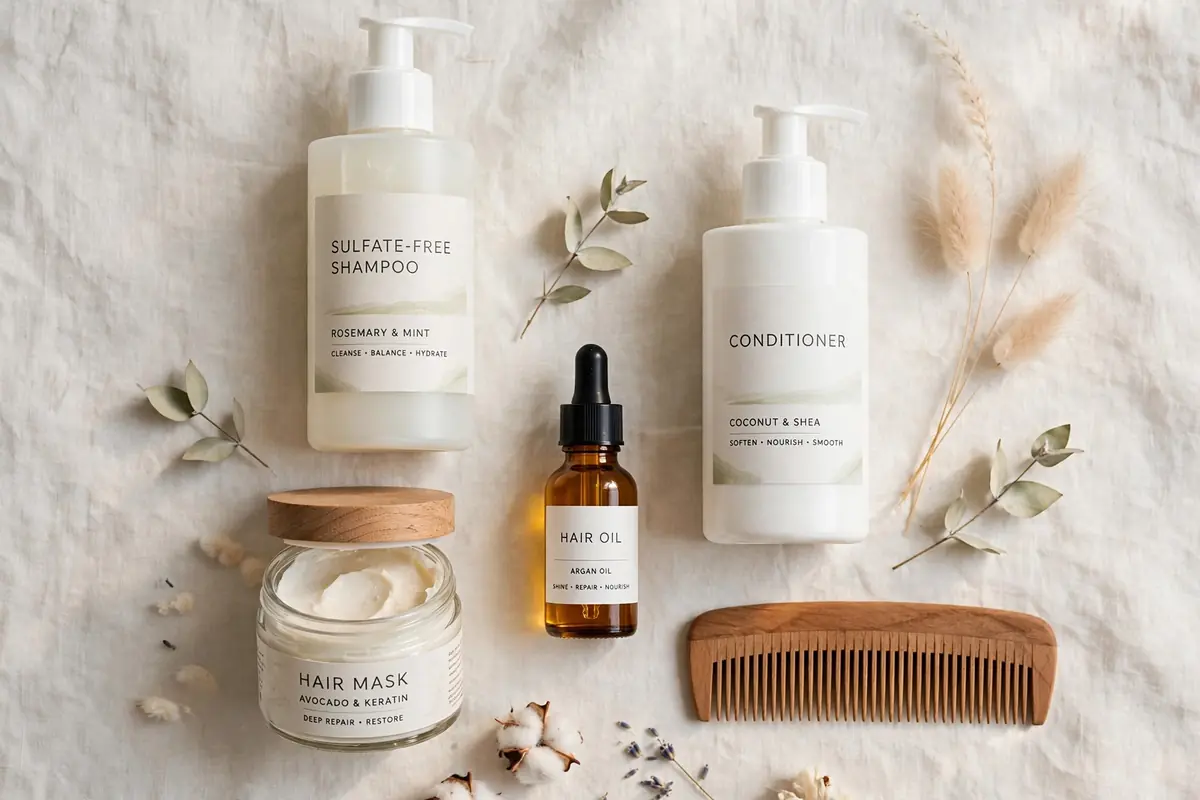
When you do wash, use lukewarm water and a sulfate-free shampoo, massaging mainly the scalp and letting the lather run down the lengths as you rinse — the lengths rarely need direct scrubbing. Follow with conditioner applied from the mid-lengths to the ends only, never the roots, which causes flat, greasy-looking hair. Leave it on for two to three minutes before rinsing with cool water, which helps seal the hair cuticle and adds shine.
Deep Condition Weekly
A weekly deep-conditioning mask is the single highest-impact step for dry or damaged hair. Unlike regular conditioner, masks contain higher concentrations of conditioning agents and proteins that penetrate the hair shaft more deeply.
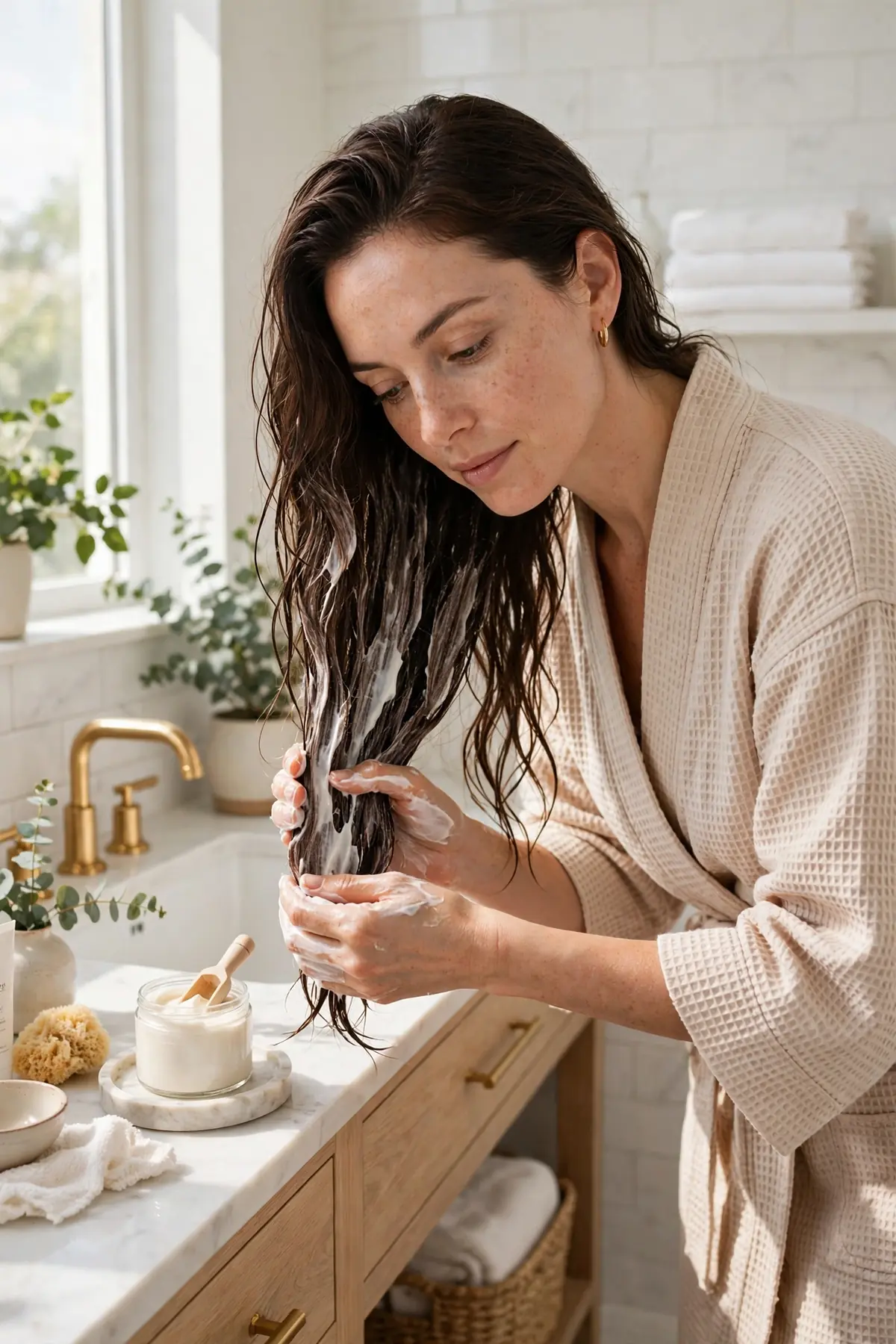
Apply a mask once a week after shampooing, focusing on the mid-lengths and ends, and leave it on for 10 to 20 minutes — longer is not better, and overdoing protein masks can actually make hair brittle. If your hair is fine or oily, use a lightweight mask and apply it less often, every two weeks. For thick, curly, or chemically treated hair, weekly masking is close to essential.
Heat Is the Biggest Enemy
Heat styling causes more hair damage than almost anything else. Studies on hair fibers show that temperatures above 180°C (356°F) crack the cuticle and weaken the inner cortex, leading to breakage and split ends that no product can reverse.
The fix is not to quit styling — it is to style smarter. Always use a heat protectant spray before blow-drying or ironing; these products form a protective film that reduces moisture loss. Keep tools at the lowest effective temperature, ideally below 180°C, and let your hair air-dry whenever you have time.
Trim Regularly and Handle Gently
Split ends cannot be repaired — they can only be cut off, and if left alone, splits travel upward and break more hair. A trim every 8 to 12 weeks, even just half a centimeter, keeps ends healthy and hair looking thicker.
Daily handling matters just as much. Wet hair is at its weakest and stretches easily, so never brush it aggressively when wet — use a wide-tooth comb starting from the ends upward. Sleep on a silk or satin pillowcase to cut friction, and avoid tight hairstyles that pull at the roots.
Feed Your Hair From the Inside
Hair is made almost entirely of keratin, a protein, so your diet shows up in your hair. Low protein intake, iron deficiency, and crash diets are among the most common hidden causes of shedding and dull hair. Dermatologists often check iron and vitamin D levels in patients with unexplained hair loss.
You do not need special supplements if your diet is balanced — eggs, fish, beans, nuts, leafy greens, and whole grains cover the key nutrients: protein, iron, zinc, biotin, and omega-3 fatty acids. Supplements help only if you have a genuine deficiency, so check with a doctor before buying expensive hair vitamins.
Your Simple Weekly Routine, Summarized
Here is the whole routine in one place: wash two to three times a week with lukewarm water and sulfate-free shampoo, condition mid-lengths to ends, deep-condition once a week, protect from heat every time you style, trim every two to three months, and eat a protein-rich diet. That is it.
Healthy, shiny hair is not a mystery or a miracle product. It is a scalp kept clean, a cuticle kept smooth, heat kept under control, and ends trimmed before they split. Follow this routine for two to three months — hair grows about a centimeter a month, so real change takes a little patience — and you will see the difference in the mirror: stronger, shinier, healthier hair that needs less styling to look its best.