How to Build a Capsule Wardrobe in 2026: Less Clothes, More Style
Open your closet. It is probably full — yet on busy mornings, you still feel like you have nothing to wear. That frustration is exactly why the capsule wardrobe has become one of the biggest fashion movements in the USA. The idea is simple: fewer clothes, chosen carefully, that all work together, so getting dressed becomes easy and you always look polished.
A capsule wardrobe is not about owning almost nothing or wearing the same outfit every day. It is about owning pieces you love, that fit well, and that mix and match effortlessly. In 2026, with smart shopping, quality over quantity, and a focus on personal style, building one is easier than ever. Here is how to do it step by step.
What Exactly Is a Capsule Wardrobe?
A capsule wardrobe is a small, curated collection of clothing — usually around 25 to 40 pieces per season — that can be combined into many different outfits. It includes tops, bottoms, dresses, outerwear, and shoes, but not accessories, underwear, or workout clothes, which sit outside the count.
The concept was created in the 1970s by a London boutique owner and made famous by designers who believed in timeless style over fast fashion trends. Today, it fits perfectly with how Americans actually live: busy schedules, smaller closets, remote and hybrid work, and a growing desire to spend less and waste less.
Why a Capsule Wardrobe Works So Well
The biggest benefit is time. When everything in your closet goes together, choosing an outfit takes minutes, not half an hour of frustration. You also save money: instead of buying trendy pieces you wear twice, you invest in quality items you wear dozens of times.
A capsule wardrobe also sharpens your personal style. When you stop chasing every trend, you discover what actually looks good on you and what you feel confident wearing. And there is a sustainability bonus: buying less and wearing more is one of the simplest ways to reduce fashion waste, something more and more American shoppers care about in 2026.
Step 1: Audit Your Closet Honestly
Before buying anything, empty your closet — yes, all of it — and sort every piece into three piles: love and wear often, maybe, and let go. Be honest. If you have not worn something in a year, if it does not fit well, or if it only worked for one occasion, it belongs in the let-go pile.
Donate or sell the let-go pile. The "maybe" pile goes into a box for thirty days: if you do not reach for anything in it, donate it too. What remains is your starting point. Most women are surprised to find they already own half of a good capsule — the problem was never too few clothes, but too many wrong ones hiding the right ones.
Step 2: Define Your Style and Color Palette
A capsule only works when its pieces coordinate, and that starts with a color palette. Choose two or three neutrals as your base — black, white, navy, beige, gray, or olive — and one or two accent colors you love and that suit your skin tone. Every new piece should match at least three things you already own.
Next, define your lifestyle honestly. A woman who works in an office, works out, and attends kids' activities needs a different capsule than someone who works from home. Aim for roughly 70 percent everyday pieces, 20 percent work-appropriate pieces, and 10 percent dressier options. Write your palette and lifestyle split down — it becomes your shopping filter and stops impulse buys.
Step 3: Build Around Core Pieces
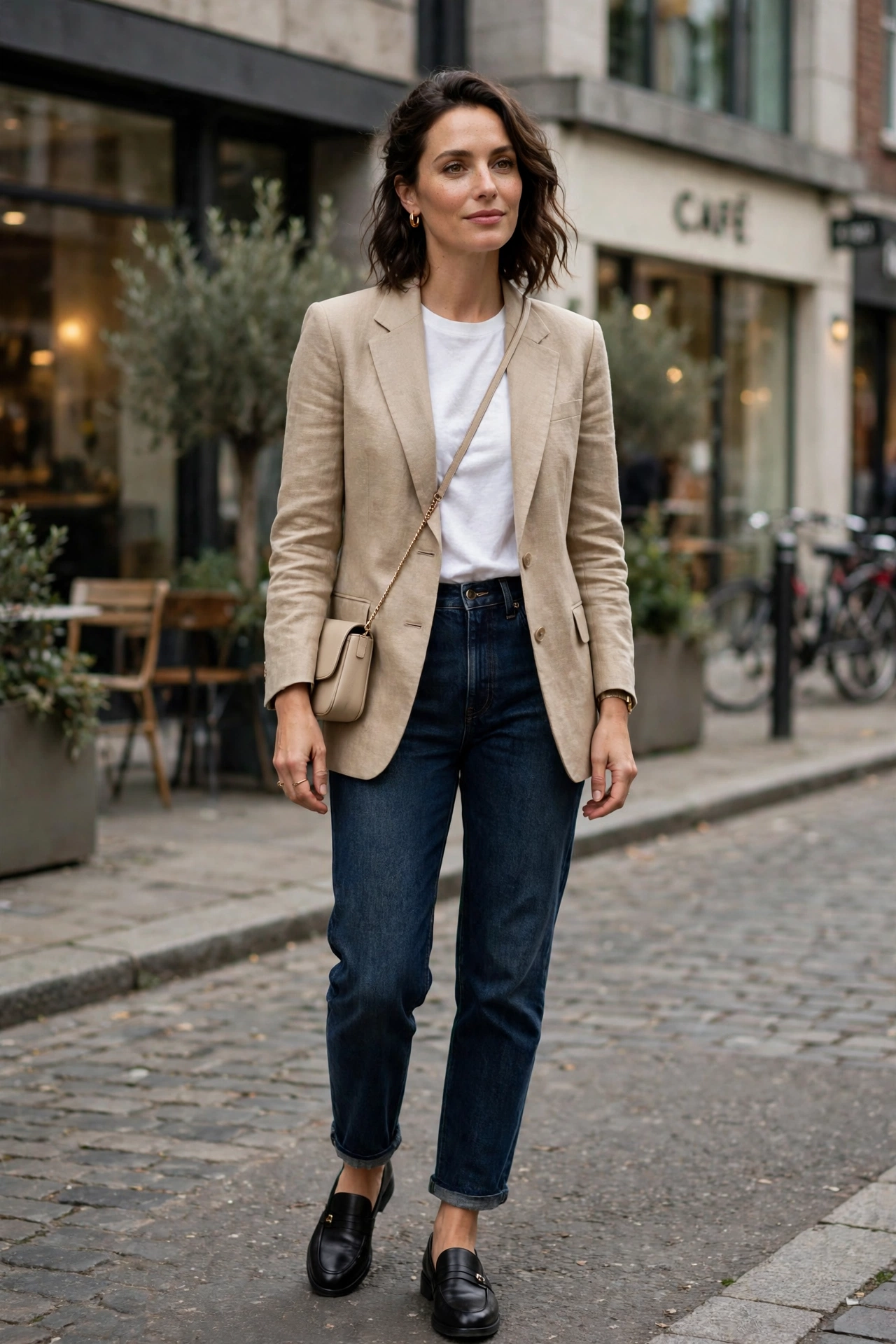
Every great capsule is built on versatile core pieces. Start with these essentials and adapt them to your taste: well-fitting jeans in a dark wash, black tailored trousers, a white button-up shirt, a few quality basic tees, a blazer, a cozy knit sweater, a little black dress, a midi skirt, a classic trench or wool coat, white sneakers, and one pair of comfortable but polished shoes like loafers or block heels.
Fit matters more than brand. A $40 top that fits perfectly beats a $200 top that does not. Try pieces on, move in them, sit in them. If a piece needs constant adjusting, it does not belong in your capsule, no matter how beautiful it looks on the hanger.
Step 4: Rotate by Season
A capsule wardrobe is seasonal, not permanent. In the USA, most women build four seasonal capsules of about 30 pieces each, swapping clothes as the weather changes. Store off-season pieces in bins or vacuum bags, and when a new season starts, shop your own storage first before buying anything new.
Seasonal rotation keeps your closet fresh without constant shopping. A summer linen dress becomes a fall piece with a cardigan and boots. A winter sweater works in spring over a skirt. Thinking in layers is the secret to making a small wardrobe feel big all year round.
Step 5: Shop Smart, Not Often
When you do shop, buy with a list, not a mood. Before purchasing, ask three questions: does it match my palette, does it pair with at least three pieces I own, and will I wear it at least thirty times? If the answer to any is no, put it back.
Invest more in the pieces you wear most — coats, shoes, jeans, blazers — and spend less on trendy basics. Quality fabrics like cotton, wool, linen, and denim last longer and look better after many washes than cheap synthetics. In 2026, resale and thrift shops are also excellent capsule sources: you can find high-quality pieces at a fraction of retail, which is both budget-friendly and sustainable.
Mistakes to Avoid
The most common capsule mistake is copying someone else's list exactly. Your capsule must fit your life, your body, and your taste — not an influencer's. Another mistake is buying everything at once. Build your capsule gradually over a season, replacing pieces as you learn what you actually reach for.
Avoid the "all neutral, no personality" trap too. A capsule should still feel like you. Your accent color, a favorite print, a signature accessory — these are what keep a minimal wardrobe from feeling boring. Accessories are unlimited in a capsule, so use scarves, jewelry, and bags to add variety without adding bulk.
A Sample 30-Piece Capsule to Start With
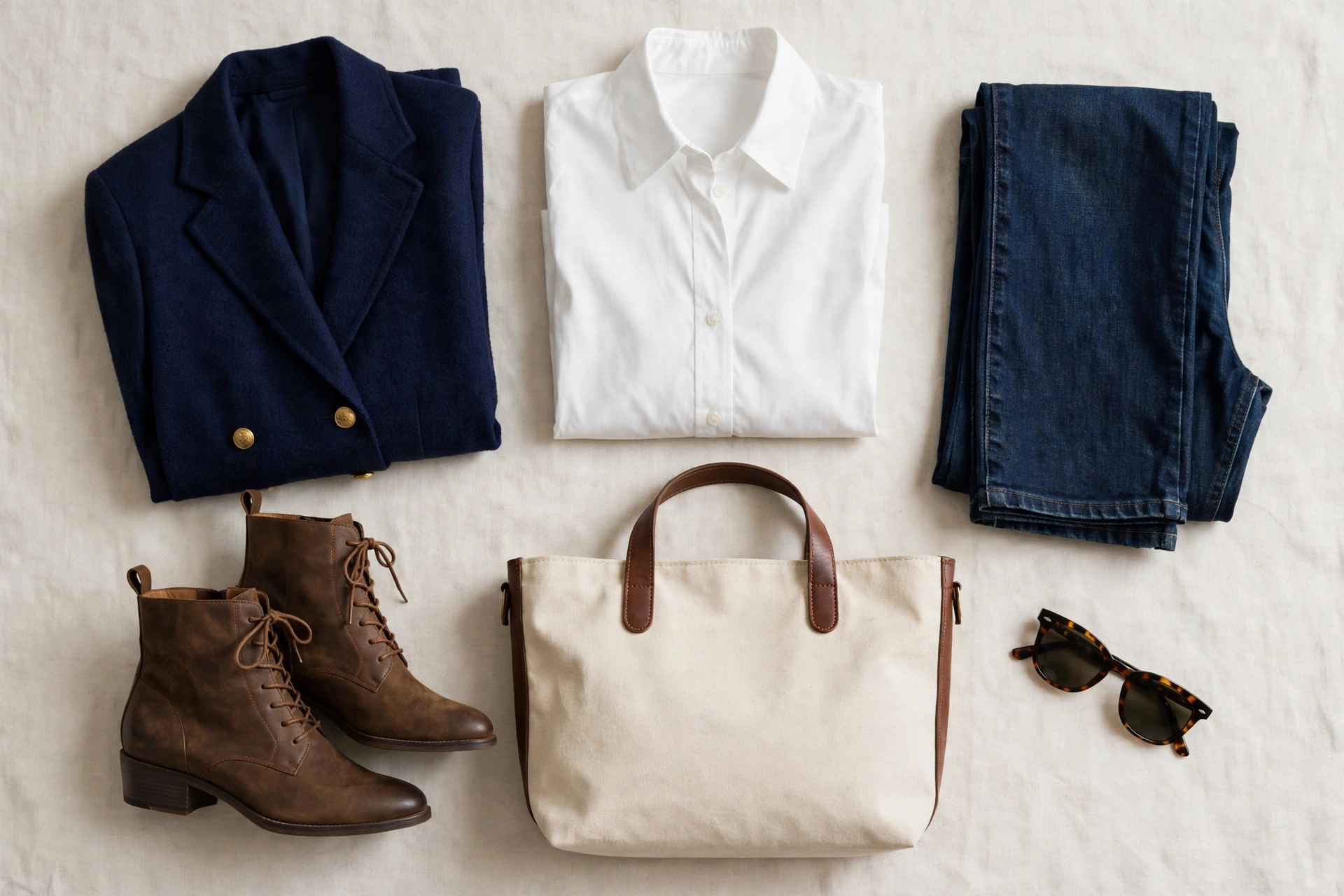
Here is a simple starting point you can adapt: 5 tops (white shirt, black tee, striped tee, blouse, knit sweater), 4 bottoms (dark jeans, black trousers, midi skirt, tailored shorts for summer), 3 dresses (little black dress, casual day dress, one dressier option), 4 layers (blazer, denim jacket, cardigan, trench coat), 3 pairs of shoes (white sneakers, loafers, ankle boots), plus a tote bag, a crossbody, and a few scarves and jewelry pieces to rotate. That is roughly thirty pieces — and well over a hundred possible outfits.
Less Clothes, More Confidence
Building a capsule wardrobe in 2026 is not about restriction. It is about freedom: freedom from morning stress, from impulse spending, from a closet that works against you. Start with the audit, define your palette, invest in core pieces, and build slowly.
Within one season, you will notice the difference — getting dressed becomes the easiest part of your day, and you will look more polished with fewer clothes than ever before. That is the real magic of a capsule wardrobe: less, but better.