How to Build a Skincare Routine for Sensitive Skin
Sensitive skin reacts to everything: new products cause redness, fragrances trigger irritation, and even weather changes can leave your face stinging. Building a skincare routine for sensitive skin feels risky — every new product is a gamble. But with the right approach, sensitive skin can be calm, comfortable, and healthy.
The secret is simplicity. Sensitive skin does best with fewer products, gentler formulas, and a consistent routine. This guide walks you through exactly how to build one.
Understanding Sensitive Skin
Sensitive skin is not a skin type — it is a condition. It means your skin barrier is weaker than average, so irritants penetrate more easily and trigger reactions: redness, itching, burning, dryness, or breakouts. Sensitive skin can accompany dry, oily, or combination skin, and it can be triggered by genetics, over-exfoliation, harsh products, or environmental factors.
The first step is identifying your triggers. Common ones include fragrances, alcohol, essential oils, harsh scrubs, and strong active ingredients like high-strength retinol. Keep a simple note of what causes reactions, and avoid those ingredients.
The Gentle Cleanser Rule
Cleansing is where most sensitive skin routines go wrong. Harsh foaming cleansers strip natural oils and damage the skin barrier, leaving skin tight and reactive. For sensitive skin, choose a gentle, fragrance-free cleanser: a milky lotion, a creamy cleanser, or a micellar water for very reactive days.
Wash with lukewarm water — never hot, which increases redness — and use your fingertips, not a washcloth or scrub brush. Cleanse once in the morning (or just rinse with water if your skin is very dry) and once at night to remove sunscreen and impurities. Pat dry gently with a soft towel; never rub

Moisturize Without Irritation
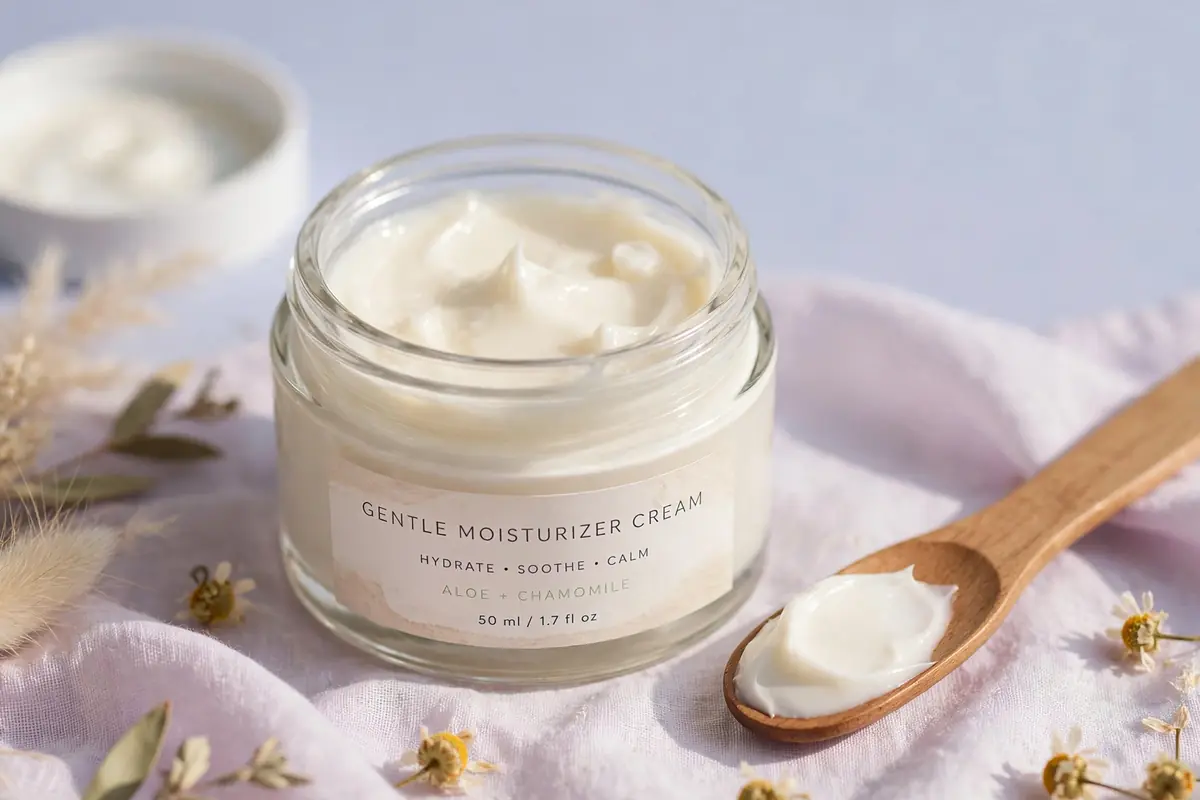
Moisturizer is the most important product for sensitive skin, because it repairs and protects the skin barrier. Look for fragrance-free creams with barrier-supporting ingredients: ceramides, hyaluronic acid, squalane, and colloidal oatmeal. These calm irritation and lock in moisture without triggering reactions.
Apply moisturizer to slightly damp skin — right after cleansing — to seal in hydration. In winter or very dry climates, a richer cream works better; in summer, a lighter lotion may be enough. If your skin reacts to a new moisturizer, stop it immediately and return to a product you know is safe. One reliable moisturizer beats five fancy ones that irritate you
Sun Protection for Sensitive Skin
Sunscreen is non-negotiable, even for sensitive skin — sun damage worsens sensitivity over time. Mineral sunscreens (with zinc oxide or titanium dioxide) are usually better tolerated than chemical ones, because they sit on the skin's surface rather than absorbing into it. Look for fragrance-free, broad-spectrum SPF 30 or higher.
Apply sunscreen every morning as the last step of your routine, even on cloudy days and indoors near windows. If a sunscreen stings, try a different mineral formula — many brands now make versions specifically for sensitive skin. Reapply every two hours outdoors. Protecting sensitive skin from the sun is one of the most effective things you can do for its long-term health

Ingredients to Avoid
Knowing what to avoid is as important as knowing what to use. For sensitive skin, skip products with added fragrance or perfume (a top irritant), denatured alcohol, essential oils (including lavender and citrus oils), and harsh physical scrubs with rough particles. Strong chemical exfoliants — high-percentage glycolic acid or daily retinoids — should be introduced very slowly or avoided.
Be cautious with "natural" products too: natural does not mean gentle, and plant extracts can be potent irritants. Always patch-test a new product: apply a small amount to your jawline or behind your ear for three days before using it on your full face. If redness or itching appears, that product is not for you — no matter how popular it is.
Building Your Routine Step by Step
A sensitive skin routine should be simple. Morning: gentle cleanser (or water rinse), moisturizer, sunscreen. Evening: gentle cleanser, moisturizer, and optionally a calming treatment — a serum with niacinamide or centella, introduced one at a time. That is the complete routine; you do not need toners, essences, or multiple serums.
Introduce new products one at a time, waiting at least two weeks between additions, so you can identify what causes any reaction. Keep your routine consistent for at least a month before judging results — sensitive skin calms slowly

When to See a Dermatologist
Some sensitive skin needs professional help. See a dermatologist if you have persistent redness, rashes that do not heal, severe itching, swelling, or reactions to nearly everything you try. These can signal conditions like eczema, rosacea, or contact dermatitis, which need diagnosis and targeted treatment.
A dermatologist can also recommend prescription products and help you build a routine around your specific condition. There is no shame in seeking help — professional guidance often saves months of trial and error (and money spent on products that do not work). Your skin deserves expert care when home routines are not enough.
Calm Skin Is Achievable
Sensitive skin is not a life sentence of redness and reactions. With a gentle cleanser, a barrier-supporting moisturizer, daily mineral sunscreen, and a simple, consistent routine, most sensitive skin becomes noticeably calmer within weeks. Avoid your triggers, patch-test everything new, and be patient. Calm, comfortable skin is not about finding a miracle product — it is about building a routine your skin can trust.