How to Choose the Right Foundation for Your Skin Tone
Few beauty frustrations are as common as buying the wrong foundation. Too orange, too pale, too pink — or a perfect match in the store that looks completely different at home. The good news is that choosing the right foundation is a skill, not luck. Once you understand undertones and how to test properly, you will never waste money on the wrong shade again.
First, Find Your Undertone
Your skin tone is how light or dark your skin is. Your undertone is the subtle color beneath the surface — and it is what actually determines whether a foundation looks natural on you. There are three undertones: warm (golden, yellow, peachy), cool (pink, red, bluish), and neutral (a mix of both).
Here are three quick tests. Look at the veins on the inside of your wrist in natural light: greenish veins usually mean warm undertones, bluish or purple veins suggest cool undertones, and a mix points to neutral. Next, the jewelry test: gold jewelry tends to flatter warm undertones, silver flatters cool ones, and if both look good, you are likely neutral. Finally, the white test: hold a piece of pure white paper next to your face — if your skin looks yellowish by comparison, you are warm; if it looks pinkish, you are cool.
Match the Shade to Your Undertone
Foundation shades are labeled with undertone clues. Warm shades often carry names or codes with W, golden, honey, or warm. Cool shades use C, pink, rosy, or cool. Neutral shades use N or beige. If you pick a foundation with the wrong undertone, even the right depth will look off — warm skin in a cool foundation turns grayish, and cool skin in a warm foundation turns orange.
Depth matters too, and it changes with the seasons. Most people need a slightly deeper shade in summer and a lighter one in winter. If you are between shades, choose the lighter one — it is much easier to warm up a light foundation with bronzer than to fix one that is too dark.
Test the Right Way (Not on Your Hand)
The most common testing mistake is swatching foundation on the back of your hand. Hand skin is a different color and texture from your face, so it tells you almost nothing. Always test on your jawline, blending a stripe from your cheek down toward your neck.
Then — and this is the critical part — walk outside and check it in natural daylight. Store lighting is designed to flatter, not to reveal the truth. The right shade should disappear into your skin, with no visible line where the foundation ends and your neck begins. If you can see the edge, it is the wrong shade. Test two or three close shades side by side and pick the one that vanishes most completely.
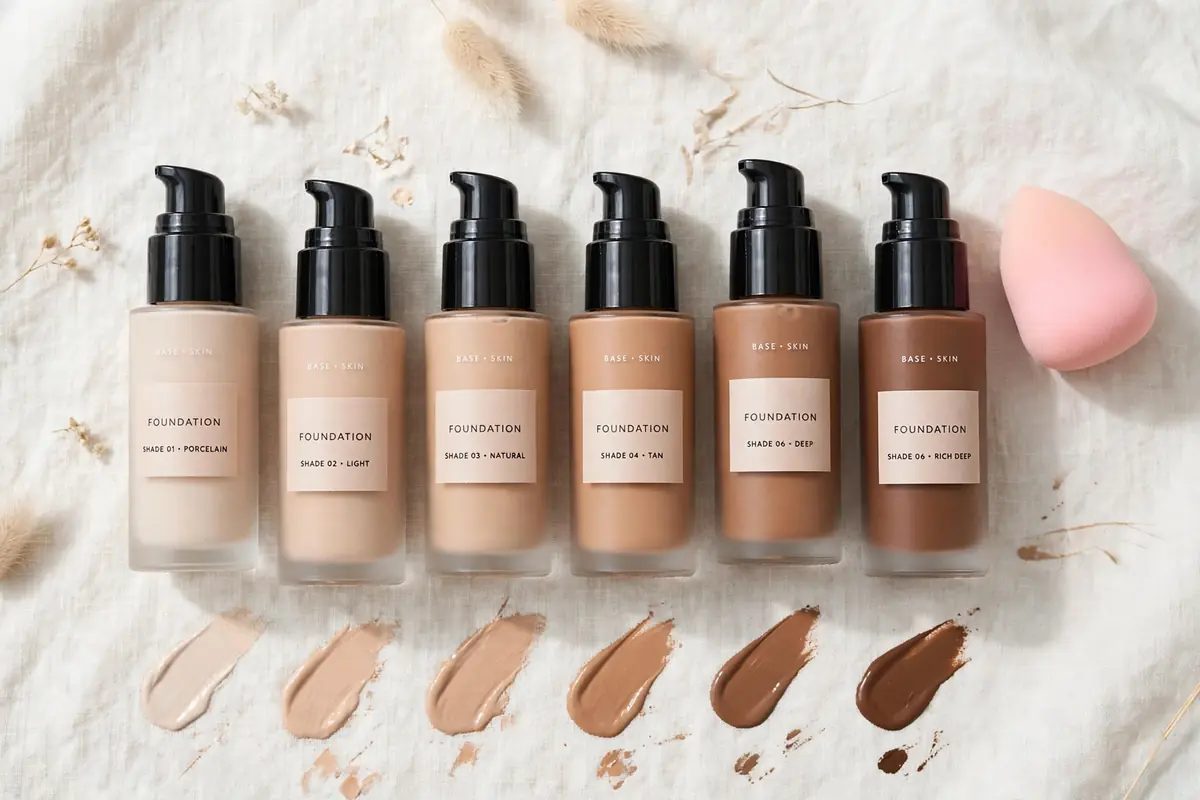
Pick the Formula for Your Skin Type
Shade is only half the decision. Formula determines how foundation looks and lasts on your skin. For oily skin, look for oil-free, matte, or long-wear liquid foundations, or a powder foundation — these control shine without clogging pores. For dry skin, choose hydrating, dewy, or serum foundations with ingredients like hyaluronic acid, which add moisture instead of settling into fine lines.
Combination skin usually does best with a satin-finish liquid: not fully matte, not dewy. Sensitive or acne-prone skin should look for non-comedogenic formulas labeled fragrance-free, since fragrance is one of the most common irritants. And if you want light everyday coverage, a tinted moisturizer or BB cream in your shade gives a natural finish with skincare benefits built in.
Coverage: Less Is Usually More
Full-coverage foundation has its place — photos, events, evenings out — but for everyday wear, medium or light coverage almost always looks better. Heavy foundation emphasizes texture, pores, and fine lines, especially as the day goes on. A lighter formula lets your real skin show through, which reads as healthier and more youthful.
The professional trick is spot coverage: apply a light layer all over, then add a tiny bit more concealer only where you need it — around the nose, under the eyes, on blemishes. You use less product, your skin looks more natural, and the foundation lasts longer because there is less of it to break down.
Common Mistakes to Avoid
Beyond wrong undertones, three mistakes ruin an otherwise good match. First, buying online without checking the shade in person — if you must buy online, use a brand's shade finder tool and compare against a foundation you already know matches. Second, forgetting that foundation oxidizes: some formulas darken slightly as they dry and mix with your skin's oils, so wait 10 to 15 minutes after applying before judging the color. Third, skipping primer or moisturizer — foundation applied to unprepared skin grabs onto dry patches and looks patchy within hours.
Your Shade, Finally Right
Choosing the right foundation comes down to three steps: know your undertone, test on your jawline in daylight, and pick a formula for your skin type. Do those three things, and the guessing game ends.
And remember — the best foundation is the one nobody can see. When people compliment your skin instead of your makeup, you know you found the right one.