How to Dress Stylish on a Budget in the USA
There is a myth that looking stylish requires a big budget. Walk through any American city and you will see the proof against it: people in thrifted blazers, well-chosen basics, and one or two statement pieces looking better than someone head-to-toe in designer labels. Style is not about how much you spend. It is about fit, cohesion, and knowing where to spend and where to save.
Here is a practical guide to looking polished in the USA without overspending — the stores, the strategies, and the mindset that make a small budget go far.
Spend on the Anchors, Save on the Rest
The single most useful budget rule is this: spend more on the pieces you wear most, and save on everything else. Your anchors are a good pair of jeans, one well-fitting blazer, comfortable everyday shoes, and a quality coat for your climate. These get worn hundreds of times, so cost-per-wear is tiny even at a higher price. A $90 blazer worn 100 times costs 90 cents per wear; a $20 top worn twice costs $10 per wear.
Everything else — trendy tops, seasonal colors, statement accessories — should come from budget sources. Trends change fast, so paying premium for them is the fastest way to waste money. Put your money where the mileage is, and let the fun pieces be cheap.
Where to Shop in the USA
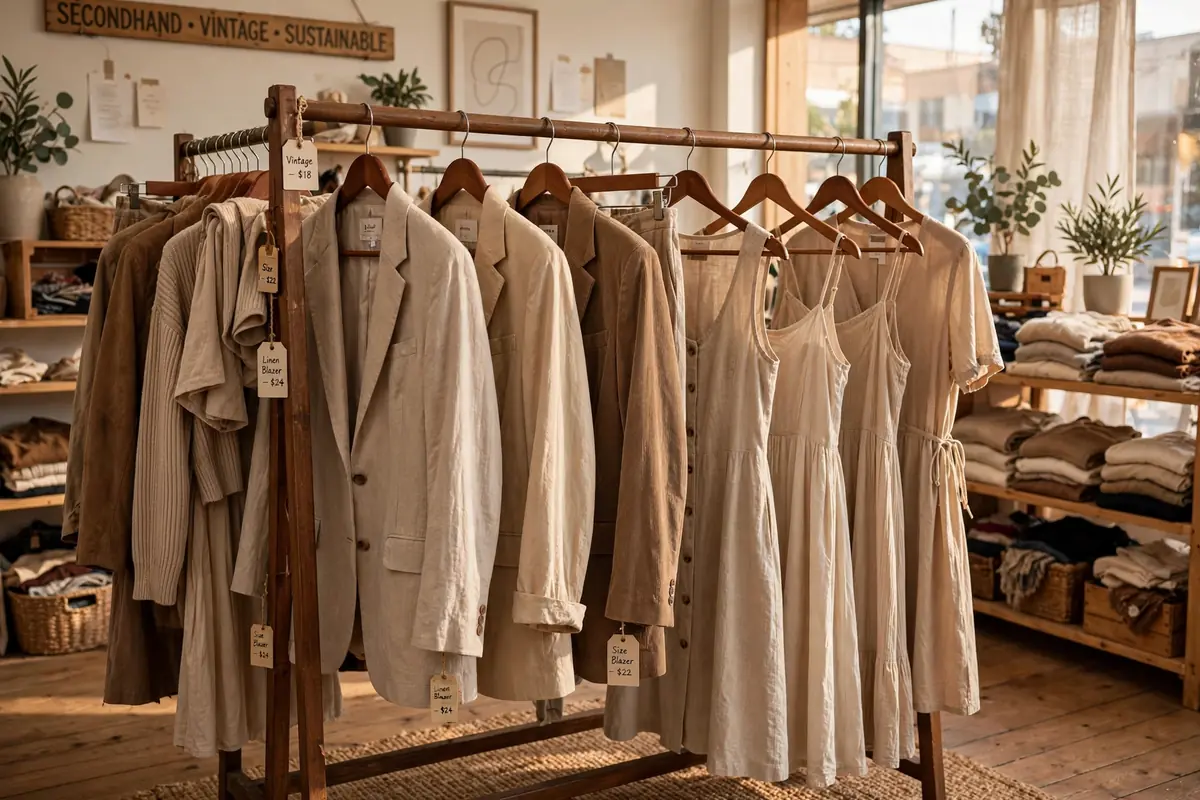
American shoppers have unusually good budget options. Thrift stores like Goodwill and local charity shops are treasure hunts — with patience, you find quality fabrics and even designer pieces for a few dollars. Online, ThredUp and Poshmark let you buy secondhand from home, often with filters for brand, size, and condition.
For new clothes, off-price retailers like TJ Maxx, Marshalls, and Nordstrom Rack sell brand-name pieces at 40–70% below department store prices. Fast-fashion chains like H&M, Target, and Old Navy cover basics and trends cheaply — the trick is choosing their better-quality items (check seams, fabric weight, and lining) rather than the thinnest options. And end-of-season clearance sales, especially in January and July, are the best time to buy quality coats, boots, and knitwear at half price or less.
The Capsule Trick: Fewer Pieces, More Outfits
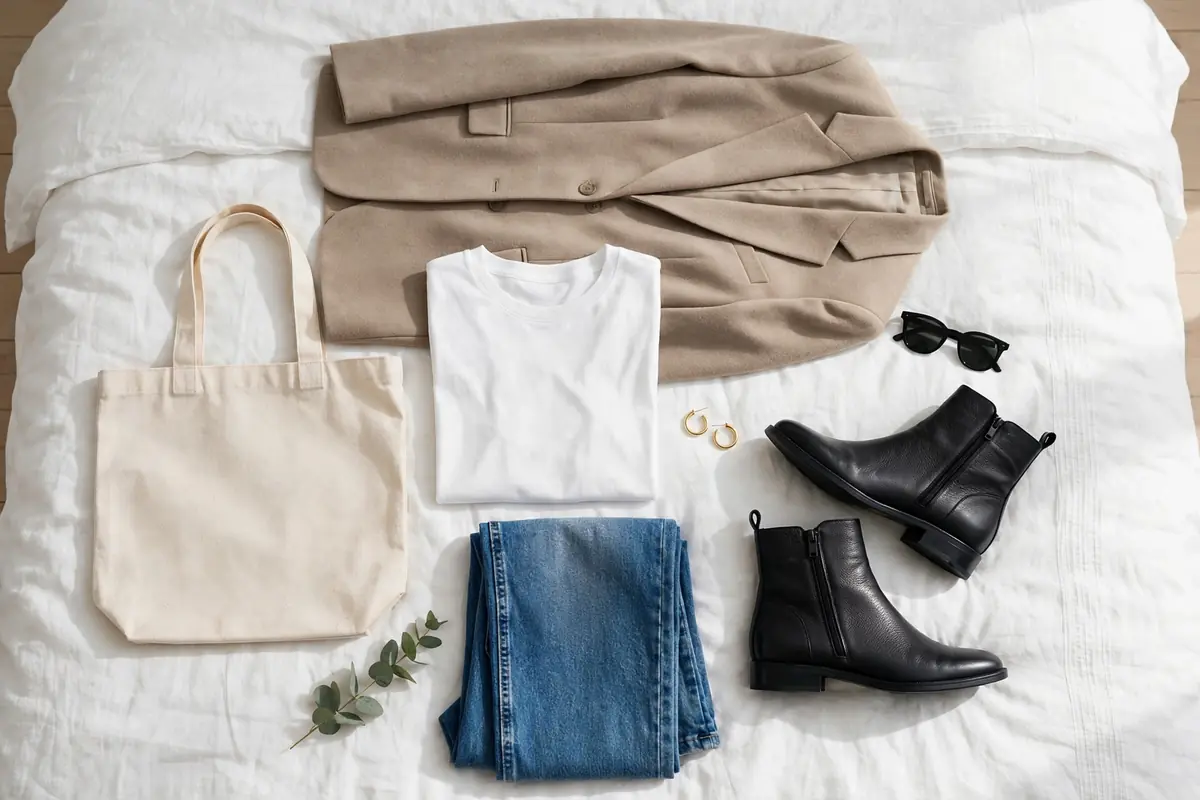
A small, coordinated wardrobe looks more stylish than a large, random one. Choose a base palette of neutrals — black, white, navy, gray, camel — plus one or two accent colors you love. When everything matches, every piece works with every other piece, and fifteen items can make dozens of outfits.
Before buying anything, ask: does this go with at least three things I already own? If not, it is not a bargain, no matter how cheap — it is a piece you will wear once and forget. This one question stops most impulse purchases and keeps your closet working hard.
Fit and Care Beat Price Tags
Here is the secret expensive-looking people know: fit matters more than brand. A $25 pair of trousers tailored to fit perfectly looks better than $200 trousers that bunch and sag. Budget for small alterations — hemming, taking in a waist, shortening a sleeve — which usually cost $10–20 and transform how clothes look on you.
Care matters just as much. Wash in cold water, skip the dryer for anything you care about, and learn basic repairs: sewing a button, fixing a loose hem, removing a stain quickly. Clothes that are clean, pressed, and in good repair always look more expensive than wrinkled, worn-out designer pieces. A steamer, which costs less than one restaurant meal, is the single best investment for looking polished daily.
Accessories: The Cheap Upgrade
Accessories are the budget shopper's superpower. A structured tote, a simple watch, a good belt, and clean shoes elevate even the simplest outfit — and unlike clothes, they do not go out of style or need constant replacing. One quality bag and one pair of classic shoes do more for your look than five cheap trendy tops.
Scarves are another high-impact, low-cost upgrade: they add color and texture to a neutral outfit instantly, and thrift stores are full of silk ones for a few dollars. The same goes for sunglasses — a classic shape from a budget brand looks identical to a luxury pair from across the room.
The Mindset That Saves Thousands
The most stylish budget shoppers share one habit: they shop with a list, not a mood. Impulse buying is where budgets die. Before a shopping trip, write down exactly what your wardrobe is missing — "black ankle boots," not "something cute." Wait 48 hours before buying anything unplanned; most "must-haves" lose their appeal by then.
Also, unsubscribe from marketing emails that manufacture urgency, and track what you actually wear for a month. Most people discover they wear 20% of their closet 80% of the time. Once you know your real habits, you stop buying for a fantasy life and start buying for the one you have — which is where both style and savings live.
Looking stylish on a budget is not about deprivation. It is about choosing well, buying less, and wearing what you own with confidence. A small wardrobe of pieces that fit, match, and are cared for will always outshine a closet full of expensive mistakes