How to Get Rid of Dark Circles Naturally
Dark circles under the eyes make you look tired even when you are not. They are one of the most common beauty complaints — and one of the most frustrating, because concealers only hide them for a day. The good news: most dark circles improve a lot with simple, natural habits, and you do not need expensive treatments to see a difference.
Here is what actually causes dark circles, and the natural remedies that genuinely help.
What Causes Dark Circles?
Dark circles have several causes, and knowing yours helps you treat them. The most common is thin skin: the skin under your eyes is the thinnest on your body, so blood vessels show through it, creating a bluish or purplish shadow. Lack of sleep, dehydration, and fatigue make this worse by making skin paler and vessels more visible.
Other causes include genetics (some families simply have darker under-eyes), aging (skin thins further over time), sun exposure (which increases melanin), allergies (which cause rubbing and inflammation), and iron deficiency.
Sleep: The First Fix
Sleep is the single most effective dark circle remedy, and the most neglected. Aim for seven to nine hours a night, and try to keep a consistent bedtime. When you are sleep-deprived, fluid collects under your eyes, skin looks paler, and shadows deepen — which is why one bad night shows on your face by morning.
Sleep position matters too: sleeping on your back with your head slightly elevated (an extra pillow) prevents fluid from pooling under your eyes overnight. And protect your sleep quality: dim lights an hour before bed, keep your phone out of the bedroom, and avoid caffeine late in the day.

Cold Compresses and Cucumber
Cold constricts blood vessels, which immediately reduces the darkness and puffiness under your eyes. A cold compress for ten minutes in the morning — a chilled spoon, a gel eye mask from the fridge, or a damp washcloth wrapped around ice — makes a visible difference within minutes.
Cucumber slices are the classic remedy for a reason: they are cool, hydrating, and gently anti-inflammatory. Lie back with chilled cucumber slices on closed eyes for ten to fifteen minutes. Chilled potato slices work similarly, thanks to a natural enzyme that lightly brightens skin.

Tea Bags: A Surprising Helper
Used tea bags are one of the best natural under-eye treatments. Black or green tea contains caffeine, which constricts blood vessels, and tannins, which reduce swelling. After brewing tea, let two bags cool in the fridge, then place them on closed eyes for ten to fifteen minutes.
Green tea adds antioxidants that protect delicate under-eye skin, while chamomile tea bags soothe irritation and redness — a good choice if your eyes are sensitive or allergy-prone.
Eye Creams That Actually Work
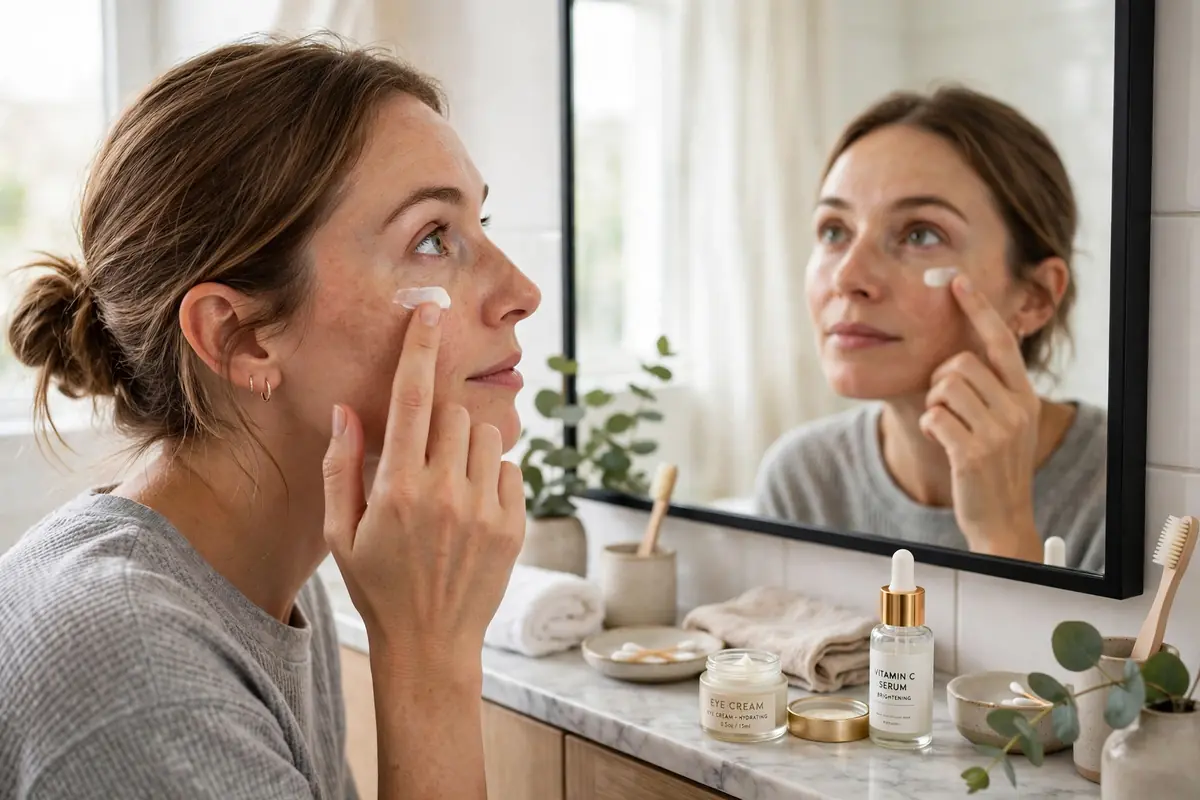
A good eye cream will not erase dark circles overnight, but the right ingredients help over weeks. Look for vitamin C (brightens and boosts collagen), retinol (thickens skin gradually — use a gentle, eye-specific formula), caffeine (reduces puffiness and darkness), hyaluronic acid (hydrates and plumps), and vitamin K (supports blood vessel health).
Apply a pea-sized amount with your ring finger — the weakest finger, so you will not tug delicate skin — tapping gently around the orbital bone, morning and night. Be patient: eye creams need four to six weeks of consistent use to show results.
Diet, Hydration, and Iron
What you eat shows under your eyes. Dehydration makes under-eye skin look hollow and shadowed, so drink water consistently through the day rather than all at once. Iron deficiency is a lesser-known cause of dark circles — if you are often tired, pale, or dizzy alongside dark circles, ask your doctor to check your iron levels.
Eat for brighter eyes: iron-rich foods (spinach, lentils, red meat, beans), vitamin C foods (citrus, peppers, berries) which help absorb iron, and vitamin K foods (leafy greens, broccoli). Limit alcohol and excess salt, both of which cause fluid retention and puffiness.

Cover Them Smartly With Makeup
While natural remedies work over time, makeup gives instant results — if applied correctly. The key is color correction: for bluish-purple circles, use a peach or salmon corrector first, which neutralizes the blue; for brownish circles, a yellow-toned corrector works better. Then apply a concealer one shade lighter than your skin, in a triangle shape under the eye, and blend gently.
Set with a light dusting of translucent powder to prevent creasing, but avoid heavy layers, which settle into fine lines and draw more attention.
When to See a Doctor
Most dark circles are harmless, but see a doctor if they appear suddenly, affect only one eye, come with swelling, pain, redness, or vision changes, or do not improve despite months of good sleep and care. These can occasionally signal allergies, thyroid issues, anemia, or other conditions worth checking.
For persistent genetic or age-related circles, a dermatologist can discuss stronger options — prescription creams, chemical peels, or laser treatments. But for most people, the natural approach works: sleep, cold, tea, a good eye cream, and patience.
Brighter Eyes, Naturally
Dark circles are common, stubborn, and very treatable. Start with sleep and hydration, add cold compresses and tea bags a few times a week, choose an eye cream with proven ingredients, and cover smartly while the natural remedies do their work. Within weeks, your eyes will look brighter, fresher, and more like the rested you — no expensive treatments required.