How to Layer Necklaces Like a Pro
Layered necklaces instantly make an outfit look styled and intentional. A single delicate chain is pretty, but two or three necklaces at different lengths add depth, personality, and polish — turning even a plain t-shirt into a finished look. Yet layering can go wrong easily: tangled chains, clashing styles, and necklaces that fight each other instead of complementing.
This guide shows you how to layer necklaces like a pro, with length combinations, metal mixing rules, and styling tips for casual and formal occasions.
Why Layered Necklaces Work
Layering works because it creates visual interest at the neckline — the area closest to your face, where the eye naturally lands. Different lengths draw the eye down in stages, making the neck look longer and the outfit more detailed. A layered look also lets you express personality: mix a sentimental pendant with a trendy chain, and your jewelry tells a story.
Layering is also practical: it lets you wear several favorite pieces at once instead of choosing just one, and it refreshes old necklaces by pairing them in new combinations.
Start with Lengths
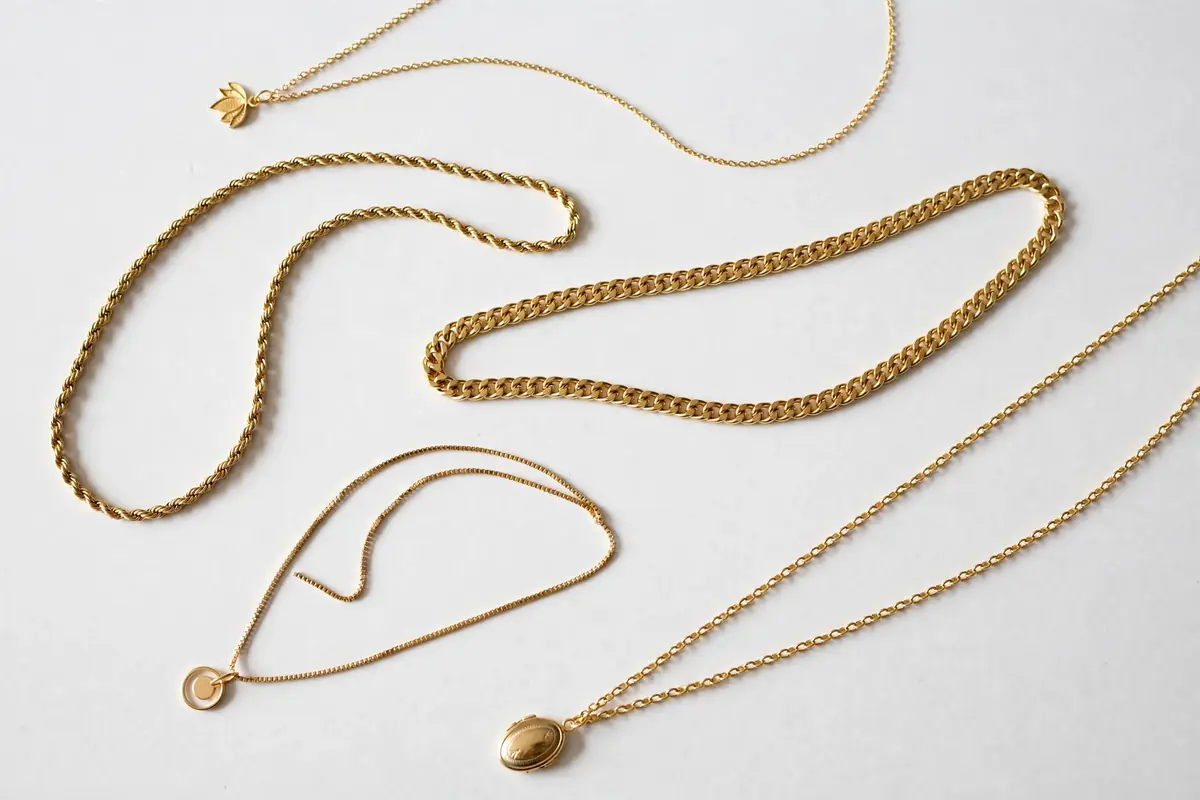
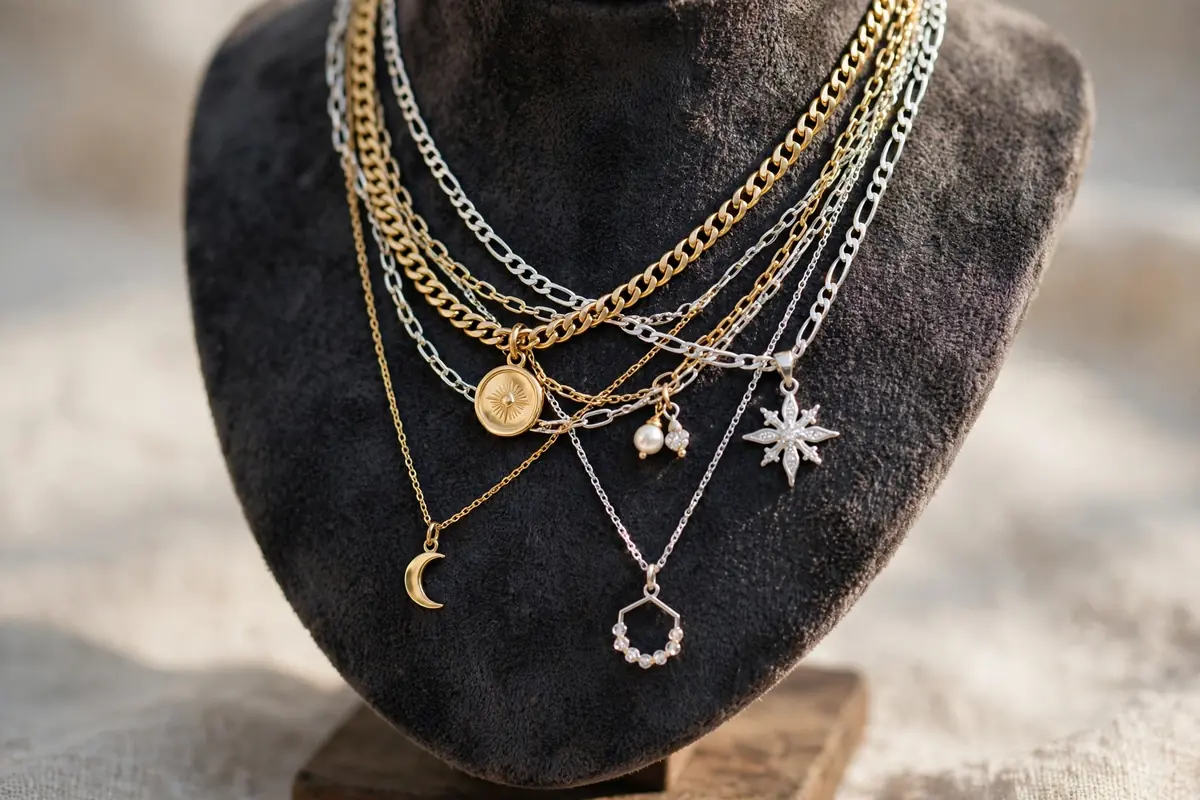
Length is the foundation of good layering. The classic combination is three lengths: a choker or short chain (14–16 inches) sitting high on the neck, a mid-length chain (18 inches) at the collarbone, and a longer pendant (20–24 inches) falling below. Each layer should sit at least two inches apart, so chains do not tangle or overlap.
If you prefer two layers, pair a short chain with a longer pendant — the contrast is clean and easy. For a bolder look, add a fourth layer, but keep spacing consistent and let the longest layer be the statement piece. Use a necklace extender or a layering clasp (a small connector that holds multiple chains at different lengths) to prevent tangling and keep spacing perfect.
Mix Metals — Carefully
Mixing metals used to be a fashion rule-breaker; now it is a style statement — when done thoughtfully. The easiest way to mix metals is to keep one metal dominant (for example, mostly gold) and add one contrasting piece (a silver pendant or rose-gold chain) as an accent. This looks intentional rather than accidental.
Another approach is to choose pieces that already combine metals, like a two-tone chain, which bridges gold and silver naturally. Avoid mixing too many metals at once — gold, silver, rose gold, and copper together can look chaotic. Stick to two metals maximum, and keep the overall tone warm or cool rather than clashing.
Add a Pendant as a Focal Point
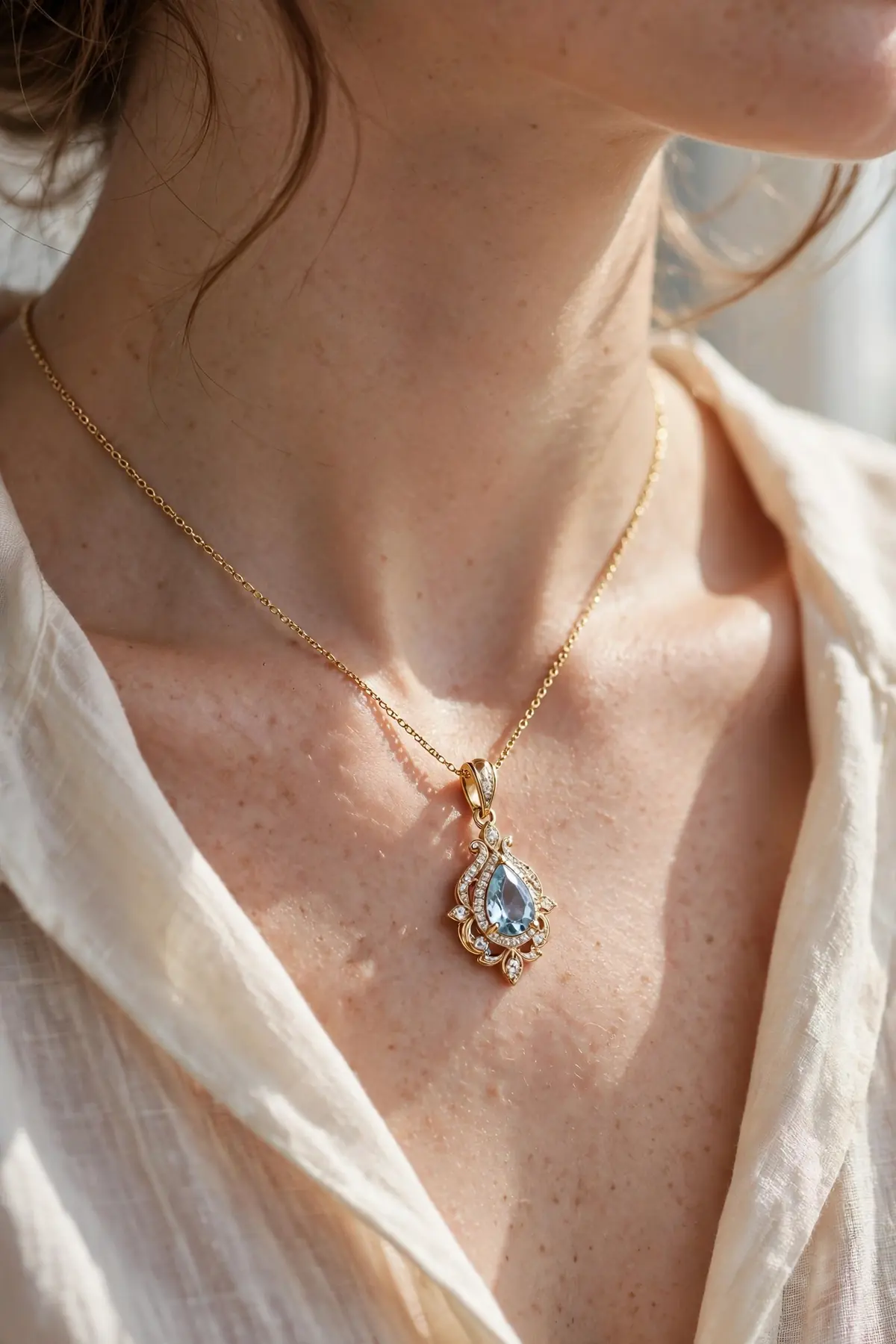
Every layered look needs a focal point — usually a pendant on the longest chain. A pendant draws the eye and anchors the layers, preventing them from looking like random chains. Choose a pendant that reflects your style: a simple gemstone, an initial, a locket, or a meaningful charm.
The pendant should be proportional to the layers: delicate chains pair with small, refined pendants, while chunkier chains can carry bolder pendants. Avoid pendants on every layer — one focal point is enough; the other chains should be simple, letting the pendant shine. If your pendant is colorful, keep the other layers plain so the color stands out.
Casual vs Formal Layering
For casual looks, layering is relaxed: mix delicate chains, a small pendant, and perhaps a beaded or leather cord for texture. Casual layering pairs beautifully with t-shirts, sweaters, and open shirts — the necklaces add polish without formality. Keep casual layers light and comfortable for all-day wear.
For formal occasions, layering becomes more refined: choose finer chains, a single elegant pendant, and perhaps a pearl or diamond accent. Formal layers should be subtle and luxurious — think thin gold chains with a diamond pendant, not chunky or noisy pieces.

Common Mistakes to Avoid
The most common layering mistake is choosing chains of similar lengths — they tangle, overlap, and look messy instead of layered. Another mistake is mixing too many heavy pieces, which feels bulky and overwhelms the neckline. Keep at least one layer delicate to balance the look.
Avoid layering necklaces that compete for attention: two large pendants, or a chunky chain with a bold statement necklace, create visual noise. Also, do not layer over busy patterns or high necklines that hide the necklaces — layering shines against simple tops, V-necks, and open collars that show the chains clearly.
Care Tips for Layered Necklaces
Layered necklaces tangle easily in storage, so store each chain separately — hang them on hooks, or keep them in individual pouches. Before wearing, lay the chains out and fasten each one, checking that lengths are spaced correctly. A layering clasp is worth buying: it holds multiple chains together at the back, preventing tangling throughout the day.
Clean your necklaces regularly with a soft cloth, and store gold and silver separately to prevent scratching. Remove necklaces before swimming, showering, or exercising — water and sweat tarnish metals and weaken chains. With proper care, your layered necklaces stay beautiful and tangle-free for years.
Your Signature Layered Look
Layering necklaces like a pro comes down to three rules: vary the lengths by at least two inches, keep one focal pendant, and balance metals and weights. Start with a simple three-layer combination, add a pendant you love, and adjust to your style. Whether casual or formal, layered necklaces add depth, personality, and polish to any outfit — your signature look is just a few chains away.